![Type=Full, Color=Light, Lockup=Default@2x.png]](https://info.tractionag.com/hs-fs/hubfs/Type=Full%2c%20Color=Light%2c%20Lockup=Default@2x.png?height=32&name=Type=Full%2c%20Color=Light%2c%20Lockup=Default@2x.png)
Farming operations split across multiple entities -
If your farming operation is split across multiple entities, here's what to know about how Traction handles it:
- Transactions are tracked by entity. Traction records accounting activity, like buying inputs or selling crops, under the specific entity where it was entered.
- Fields aren't tied to an entity. Traction currently can't link a field to a specific entity, so input and harvested crop inventory aren't tracked by entity either.
- Some reports reflect all entities combined. Accounting transactions, like input purchases and crop sales, are tracked by entity. But operational data, such as Growing Crops and Harvested Crops inventory, isn't tied to a specific entity. Because inventory reports and Accrual and Market Value Balance sheets rely on that operational data, they currently combine activity across all entities and can't be broken out by entity.
Be thoughtful about the entities you set up
Entities are the foundation for how your financial data is segmented in Traction, so it's worth planning how your personal, farm, and other business finances should be organized before you set them up.
- Personal and farm expenses share a bank or credit card account? Use Traction's Family Living option to track personal expenses within your farm entity, no separate entity needed.
- Personal and farm finances are completely separate? Set up a dedicated entity for your personal finances.
- Running a side business with its own bank account? Set it up as its own separate entity.
Keep in mind: whatever gets grouped into the same entity gets combined on your Balance Sheet and Income Statement. If accounts that should be kept apart end up in the same entity, that data won't be separable later.
Ensuring that your entities are set up correctly is an essential step that allows Traction to best serve your operation. If you would like assistance with your initial setup strategy, please feel free to reach out to our Success Team at 1-888-466-6080, success@tractionag.com, or utilize the chat functionality in the application.
|
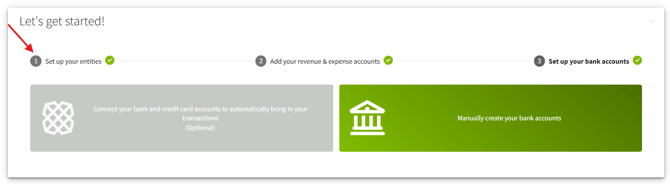
1. After first logging in to your Traction account, you will be greeted by our Let's get started! Dashboard widget. The first thing we need to do is create Entities inside your account. Click the orange button to start this process. |
 |
| 2. Click the + New Entity button | 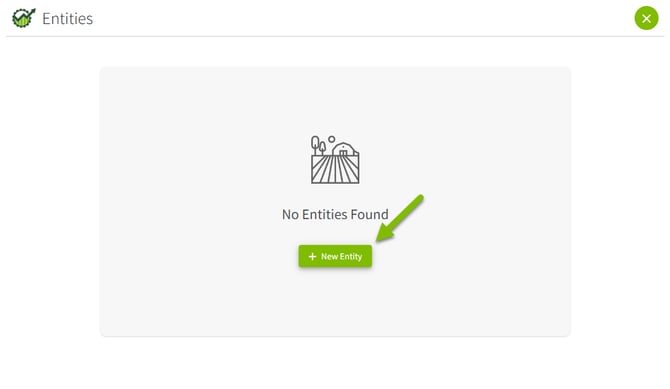 |
|
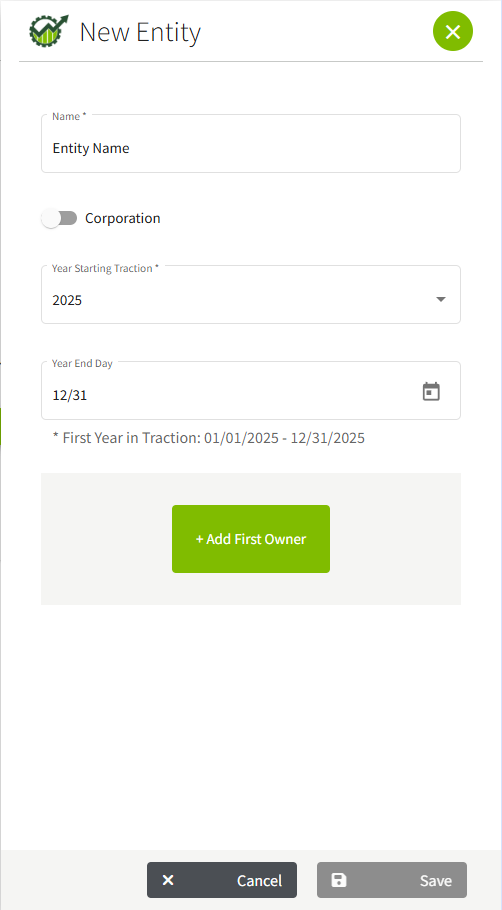
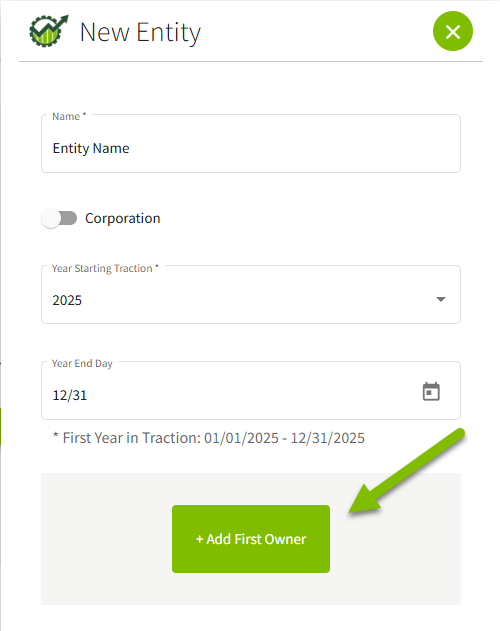
3. Traction's New Entity screen will appear. Fill out all of the fields as applicable. Setting up an entity with a fiscal year end other than 12/31 If your entity's fiscal year doesn't end on December 31, your fiscal year will span two calendar years, for example, April 1 to March 31. When that's the case, the year you enter for Year Starting Traction is the year your fiscal year ends, not the year it begins.
Example: Your fiscal year runs April 1 to March 31, and you want your first year in Traction to start April 1, 2021. Since that fiscal year doesn't close until March 31, 2022, you'd enter 2022 for Year Starting Traction, and Traction confirms this as "First Year in Traction: 04/01/2021 - 03/31/2022." |
 |
|
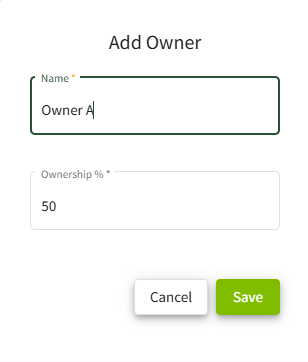
4. For the Ownership section, you can add multiple owners based on their percentage of ownership (assuming Corporation was not selected). Simply click on the +Add First Owner button, add an owner's name, and the percent they own. If adding multiple owners, click on the +Add Owner, add the owner's name, and the percent they own.
|
|
| 5. Review your information (it can be edited later) and then click the Save & New button. |  |
|
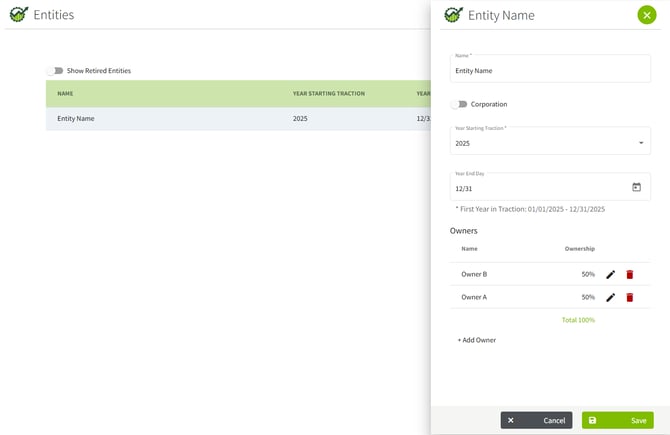
6. The entity will be displayed in your Entities list. |
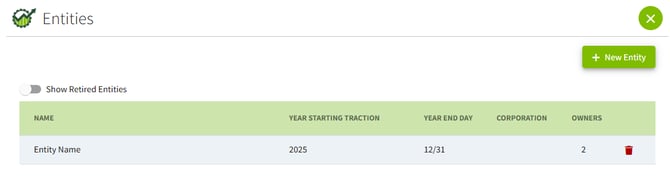 |
|
7. To edit an already existing entity, click on the entity in the list to bring up its summary page. You will now see the entity's information populated in the Entity screen. If you make any changes you would like to save, click the Save button. If you would like to discard your changes, click the Cancel button. |
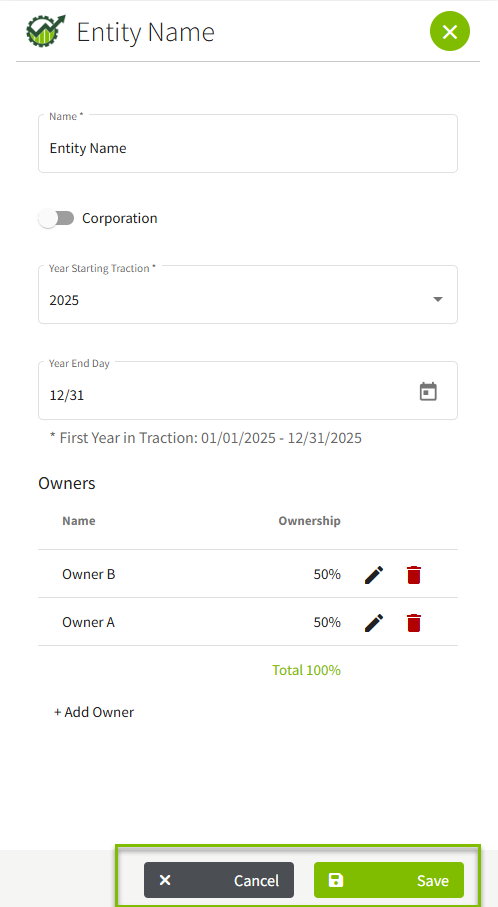 |
Updating an Entity
Users now have 2 ways to get to their Entities.
1. Navigate to the User Icon in the upper right hand corner of your screen and choose Entities in the menu.
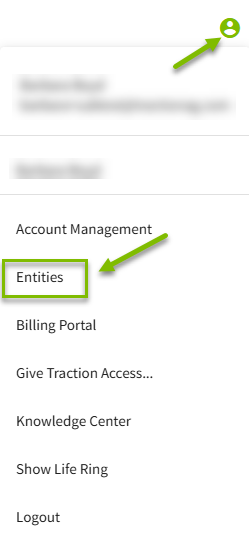
or
1. Navigate to the Dashboard, expand Let's Get Started, click on Step 1, followed by the big green button.
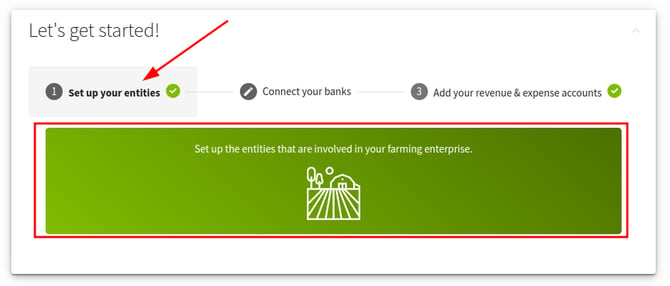
2. Click on the entity that is associated with the account you are trying to update. A new panel will open. Edit the information as appropriate.